Slow drains in commercial restrooms often point to buildup or a blockage that could get worse. Staff can take a few safe first steps, but repeated clogs or several slow fixtures need a plumber to check the system. Acting early helps businesses keep restrooms clean, working, and ready for daily use.
A sink that drains slowly may seem like a small problem during a busy day. Still, staff, customers, and tenants all need clean, working restrooms and break rooms. A quick check can help a business spot trouble before it interrupts work or leads to a backup.
Table of Contents
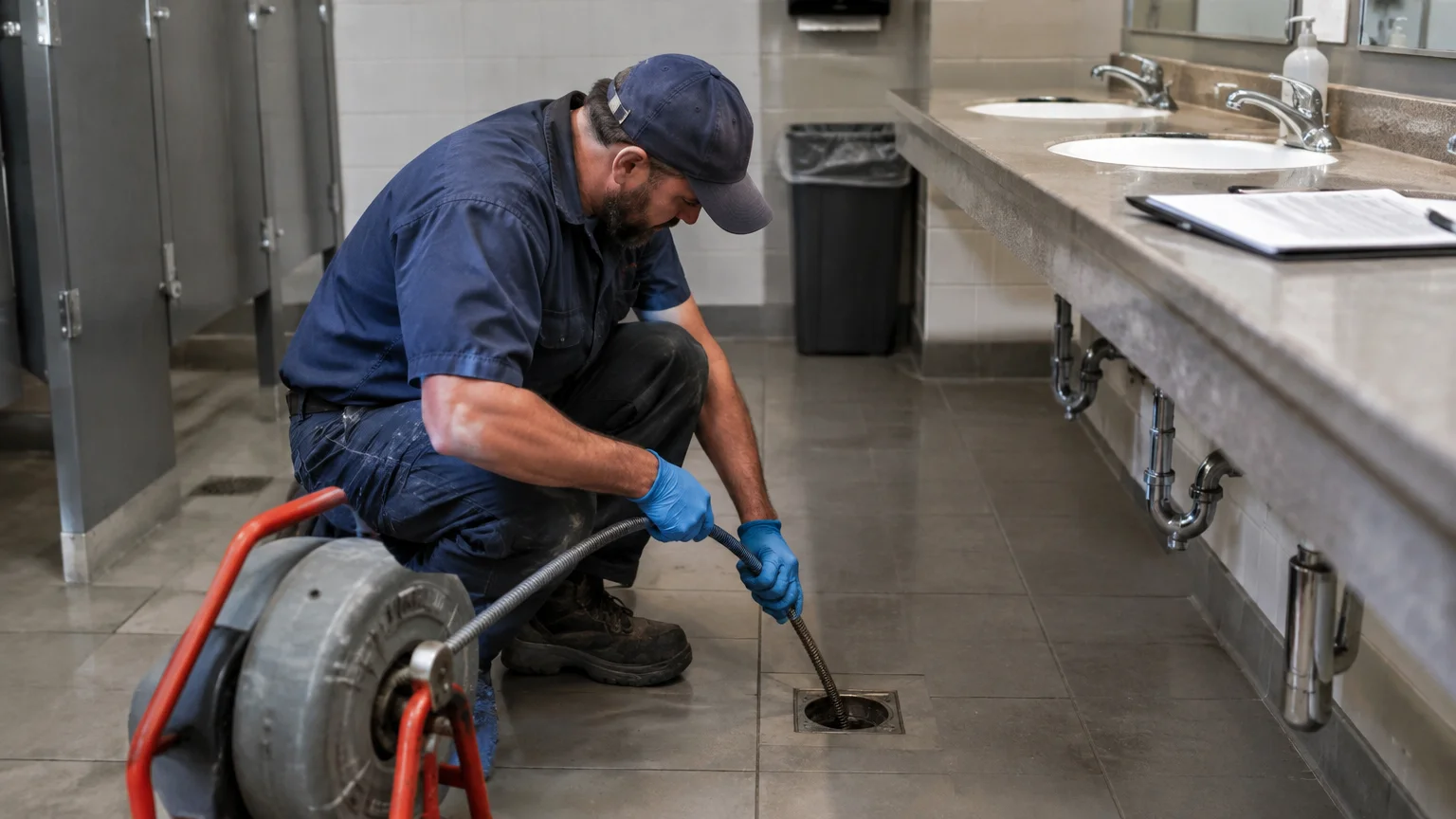
- Why are slow drains in commercial restrooms a serious problem?
- What causes slow drains in commercial restrooms and break rooms?
- What signs suggest a slow drain needs prompt attention?
- What can happen if a business ignores a slow drain?
- What should staff do when a commercial drain slows down?
- When should a business call a commercial plumber?
- How can businesses prevent recurring slow drains?
- Key takeaways
- Frequently Asked Questions
- Conclusion
Why are slow drains in commercial restrooms a serious problem?
Slow drains can affect hygiene, comfort, and daily work. They may also point to a growing clog or trouble farther along a drain line. A drain line is a pipe that carries used water away from sinks, toilets, and other fixtures. Quick attention helps keep shared areas usable and may help find the cause before water backs up.
Restrooms and break rooms serve many people during a workday. A sink that holds water can make handwashing harder. A restroom with a bad smell or clogged fixture can leave customers and staff with a poor impression. For property managers, one tenant’s complaint may also point to trouble in other parts of the building.
A slow drain does not always mean the plumbing has failed. Hair, soap, food bits, or other waste may be narrowing the pipe. But if water drains more slowly over time, the blockage may be getting bigger. When part of a drain path is blocked, water takes longer to pass through it.
Drain trouble can also involve plumbing vents. A vent is a pipe that lets air move through the plumbing system so wastewater can flow. A blocked drain or vent may cause gurgling, bad smells, or poor drainage. The cause may not be clear from looking at one sink or floor drain.
Offices, shops, and apartment buildings all benefit from timely checks. Temple Texas Plumbing can help property owners understand when a slow drain needs a plumber’s attention. Commercial plumbing serves businesses and multi-unit buildings. It includes their pipes, fixtures, and drain systems. These systems may need a different plan than plumbing in one home because more people use the same fixtures.
What causes slow drains in commercial restrooms and break rooms?
Slow drains often start when material builds up inside a pipe or blocks its opening. Restroom drains may collect hair, soap, paper, and dirt. Break-room sinks may collect food scraps, grease, or drink residue. The type of waste often depends on how people use each space.
Restroom sinks collect hair and soap during daily use. Soap can mix with hair and dirt, then stick to the inside of a pipe. Paper towels and wipes can also cause clogs when they enter a sink or toilet. Items meant for a waste bin should not be flushed or washed down a drain.
Break-room sinks face other risks. Food bits can gather near the drain, while fats and oils may coat the inside of pipes. Grease may look like a liquid while warm, but it can cool and stick to pipe walls. More debris can catch on that layer over time, making water drain slowly. A sink strainer catches some food scraps, but grease still belongs in a suitable waste container.
Some slow drains come from a problem deeper in the plumbing system. A shared branch line carries wastewater from more than one fixture. If that line is partly blocked, several sinks or floor drains may slow down around the same time. A damaged pipe, poor slope, or vent issue can also affect how water flows.
Businesses should note when the problem began and which fixtures are affected. If one restroom sink is slow but nearby fixtures work, the clog may be close to that sink. If sinks, toilets, or floor drains across a shared area have trouble, the cause may be farther down the line. These details can help a plumber choose what to check and how to fix it.
What signs suggest a slow drain needs prompt attention?
A drain needs prompt attention when it keeps slowing, clogs again soon after clearing, or affects more than one fixture. Gurgling, bad smells, or water rising from a floor drain may point to a deeper blockage. A backup or leak needs urgent attention.
One slow sink may have a small clog close to the fixture. But a problem that returns after basic cleaning may mean debris remains in the pipe or keeps getting into it. Staff should not treat repeat clogs as normal. A short record of when the problem returns can show whether it is getting worse.
Listen for gurgling as water leaves a sink or toilet. This sound may happen when air cannot move well through the drain system. A bad smell may come from waste caught in a pipe, a dry trap, or another plumbing issue. A trap is the curved pipe under a fixture that holds water and helps keep sewer gases out of a room. Smells that remain need a proper check.
Notice how many fixtures have trouble. Several slow sinks in one restroom may share a drain line. A slow sink and a bubbling toilet in another nearby area may point to a wider problem. In a multi-unit building, reports from tenants on the same floor or nearby units can help show that a shared line needs attention.
Treat sewage, standing wastewater, or water rising through a floor drain as urgent. Keep people away from the affected area and alert the property manager. If there is also a water leak, protect nearby items only if it is safe. Do not use the affected fixtures until the cause is known.
What can happen if a business ignores a slow drain?
Ignoring a slow drain can let a partial blockage grow into a backup. Wastewater may spill onto floors, harm nearby materials, and make a restroom unsafe. The longer the problem lasts, the more it may disrupt staff, tenants, customers, or building care.
A slow drain can seem manageable at first. But continued use may push more waste toward the blockage. If the line becomes fully blocked, sinks or toilets may stop draining. Water may also come back through a nearby fixture or floor drain. What happens depends on the plumbing layout and where the blockage sits.
A backup can spread dirty water across a floor. Cleanup may be needed, and water can affect flooring, wall trim, stored supplies, or nearby equipment. A leak inside a wall or beneath a floor may stay hidden until stains or damp spots appear. Quick action may limit how long water spreads, though an inspection is needed to confirm the source.
Poor drainage can also make sanitation harder. People may avoid a restroom with standing water, bad smells, or a fixture that does not work. A business may need to close part of its space during repairs and cleanup. Property managers can keep clear records of complaints and repairs to track repeat problems across buildings.
Commercial drain cleaning may clear some blockages, but the right method depends on the cause and pipe condition. A repeat clog may need more than clearing the nearest drain opening. A plumber can check whether the trouble is local or part of a shared line. Early attention helps a business act before the problem grows.
What should staff do when a commercial drain slows down?
Staff should stop putting waste into the affected drain, keep the area clear, and tell the person who handles plumbing issues. They can remove visible debris from a drain cover if it is safe. They should avoid harsh chemicals, forceful tools, and repeated flushing that could make things worse.
Simple cleaning is often safe when the problem is small and the area is clean. Staff can remove hair or food scraps from a removable strainer. They can wipe the sink and check whether a stopper is stuck. These steps may be enough when water still drains and there are no warning signs. A professional is not needed for these basic checks alone.
Staff should not mix drain cleaners or pour chemicals into a blocked drain. Some products can harm pipes or splash back. Do not push a wire or other tool deep into a drain, since it may harm a pipe or push debris farther in. A plunger may help with a simple fixture clog, but do not use one if chemicals are in the drain or wastewater is backing up.
Before reporting the issue, staff can note a few details:
- Which sink, toilet, or floor drain is slow.
- When the problem started and whether it has returned.
- Whether nearby fixtures drain slowly or make sounds.
- Any smells, leaks, standing water, or recent plumbing work.
- What simple checks were tried and what happened next.
These notes help a plumber understand the problem. In a building with tenants, managers can ask whether nearby units have similar trouble. Staff should also put up a sign or block access to an unsafe area. If water is spreading, keep people away and follow the building’s steps for reporting urgent damage.
When should a business call a commercial plumber?
A business should call a plumber when a drain keeps clogging, several fixtures slow down, or water backs up. Urgent help is needed for wastewater spills, leaks, or drain trouble that makes a restroom unsafe. A plumber can check the cause and suggest a suitable repair.
A commercial plumber works on plumbing in places such as offices, shops, restaurants, and apartment buildings. Businesses looking for commercial plumbing near me should choose a provider who handles their type of building and drain problem. Property managers can share which fixtures are affected, the building layout, and past repairs when they arrange help.
A plumber may ask when the problem began and whether it affects one fixture or several. They may check the drain opening, trap, and nearby pipe joints. If the blockage seems farther along the line, they may use a camera or other tools to look inside the pipe. The best method depends on access, pipe condition, and what the first checks show.
A camera inspection uses a small camera to view the inside of a drain pipe. It can help find buildup, a blockage, or pipe damage without opening every wall or floor. A plumber may also clear a line with tools made for drain work. The plumber should explain what they find and whether more work is needed.
Some plumbing problems can look alike but need different checks. Low water pressure, a toilet that keeps running, and a slow drain are not the same issue. A toilet that flushes poorly may need toilet repair, while a running toilet may need its fill or flush parts checked. Businesses should describe what they see instead of guessing at the cause. If there is a gas smell, leave the area and follow emergency safety steps. Do not test for a leak or use plumbing tools.
How can businesses prevent recurring slow drains?
Businesses can help prevent repeat drain trouble by keeping waste out of sinks, cleaning strainers, and checking fixtures on a routine schedule. Managers should track repeat problems and arrange professional care when clogs return. Good habits help, but they cannot prevent every pipe or vent issue.
Put clear reminders near sinks about what belongs in a bin, not a drain. Use strainers in break-room sinks to catch food scraps. Put grease and cooking oil in suitable waste containers. In restrooms, provide waste bins and keep paper towels and wipes out of toilets. Simple reminders can help staff and visitors use fixtures with care.
A building care plan should say who checks shared restrooms and break rooms. During regular cleaning, staff can look for slow flow, smells, leaks, and loose drain covers. Managers can keep a record of the date, place, and repair for each issue. Patterns may show that one fixture or shared line needs a closer look.
For multi-unit buildings, property managers can give tenants a clear way to report drain trouble. Early reports from nearby units may help reveal a shared line problem. Managers should also keep access details and past service records ready for a plumber. This can help the visit focus on the right part of the system.
Routine professional care may include checking drains, clearing buildup, and reviewing areas with repeat trouble. The right schedule depends on how many people use the building, what enters the drains, and the condition of the system. Temple Texas Plumbing can help businesses think about drain care along with other commercial plumbing needs. In Temple, a written care plan can help property teams spot patterns and respond clearly across Downtown, Midtown, Canyon Creek, Western Hills, Bird Creek, and nearby areas.
Key takeaways
- Slow drains may point to buildup or trouble in a shared line.
- Hair, soap, food, and grease can narrow pipes over time.
- Several slow fixtures, backups, smells, and repeat clogs need attention.
- Staff can clear visible debris but should avoid harsh chemicals and deep tools.
- Routine checks and clear reports can help businesses catch problems sooner.
Frequently Asked Questions
Can staff safely clear a slow commercial sink?
Staff can remove visible debris from a strainer and clean the sink area when it is safe. They should not mix chemicals, push tools deep into pipes, or keep using a fixture that backs up. If the drain remains slow or the problem returns, tell the building manager and arrange a plumbing check.
Why do several drains slow down at the same time?
Several slow fixtures may share a branch line or connect to a larger drain. A blockage in that shared path can affect more than one sink or restroom. Note which fixtures are affected and where they are. A plumber can check whether the trouble is local or shared.
Are drain odors a sign of a serious plumbing problem?
A bad smell may come from waste or buildup in a drain, but it can have other causes. A dry trap or vent problem may also let smells enter a room. If the smell remains after basic cleaning, or comes with gurgling or slow flow, have the drain checked.
What should a business do if a restroom drain backs up?
Stop using the affected fixtures and keep people away from wastewater. Tell the building manager and arrange urgent plumbing help. Do not pour chemicals into standing water or try to force the blockage through. If water is spreading, follow the building’s safety steps and protect nearby items only when safe.
How can break-room sinks stay clear?
Use a strainer to catch food scraps, and put grease and oil in a waste container. Wipe plates and pans before washing them, and keep food residue out of the sink. Staff should report slow flow early. These habits help, but a plumber should check clogs that keep coming back.
Conclusion
Slow drains may start with simple buildup, but repeat trouble can point to a shared line or another plumbing issue. Staff can take safe first steps, while managers track symptoms and keep affected fixtures out of use when needed. Routine care helps protect restrooms, break rooms, and daily building operations. Businesses in Temple can use these steps to help protect shared spaces.
Contact us at Temple Texas Plumbing to discuss slow drains or commercial plumbing support for your property.