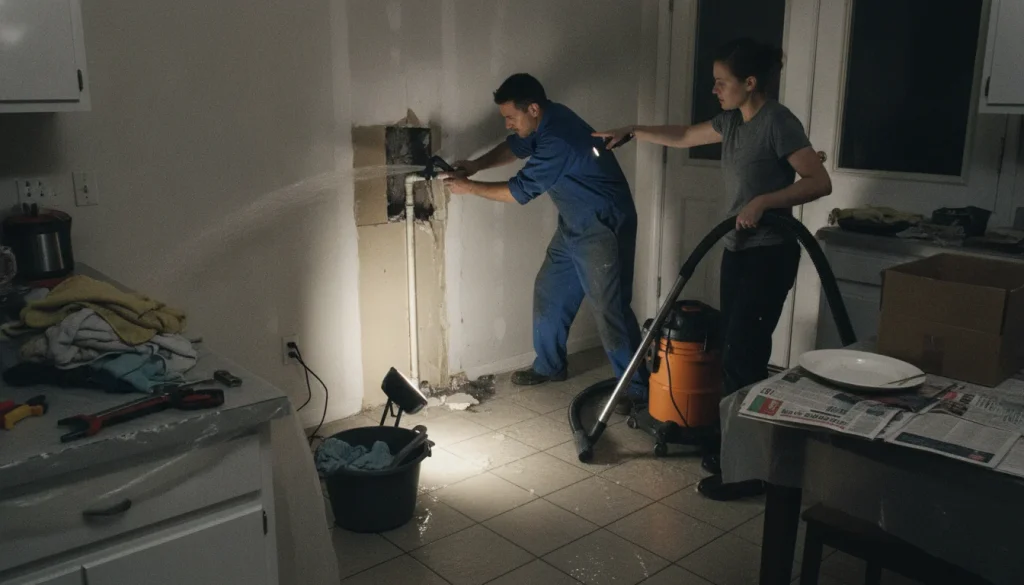
When water is spraying from a wall or ceiling and floors are soaking fast, you’re dealing with a burst pipe—an active leak that requires immediate action. A burst pipe is a broken water line releasing water rapidly; pros in Temple, Texas estimate emergency burst pipe repair cost based on timing, access, materials, and drying or restoration needs. Because a 1/2-inch supply line can discharge roughly 7–14 gallons per minute at typical residential pressure, every minute matters.
Key Takeaways
- Emergency means high, uncontrolled flow or damage spreading despite shutoff efforts.
- After-hours timing, difficult access, and moisture mitigation are major cost drivers.
- Pipe material (copper, PEX, CPVC) and repair scope influence labor and parts.
- Drying and restoration can exceed the plumbing portion of repair costs.
Temple Texas Plumbing works across Temple, Texas every week, helping homeowners and businesses stop leaks quickly and reduce secondary damage. The team serves the Temple area and can guide you on safe next steps while you wait.
What Counts as an Emergency and What Drives the Price
A small drip turns into an emergency when the flow is strong, water won’t stop, or damage is spreading to walls, floors, or ceilings. Turn the main shutoff valve first; if water keeps flowing or you can’t locate the valve, treat the situation as urgent.
Exact costs vary by location, access, materials, and cleanup needs. After-hours service often includes a premium for nights, weekends, and holidays. Faster response can contain water damage, which may reduce later restoration work compared to a delayed visit.
In Temple, Texas, quick arrival can prevent saturated drywall and flooring—damage that can influence the final bill more than the pipe repair itself.
Cost Breakdown: Labor, Materials, Access, and Cleanup
Plumbers charge for the time and effort to locate, expose, and repair the break.
Diagnostic and call-out fees. A visit typically includes confirming the source, checking valves, and taking initial safety steps.
Leak detection and opening walls/ceilings. Hidden failures may require moisture meters and careful cuts to drywall or ceilings to reach the pipe.
Pipe materials and fittings. Copper is a rigid metal pipe joined by solder. PEX is a flexible plastic joined by crimp rings. CPVC is chlorinated PVC used for hot water. Galvanized steel is older and prone to internal corrosion. Material choice affects both parts and labor.
Labor hours for simple vs. complex fixes. A short, clean section replacement is faster. Long runs, numerous fittings, or tight access add time.
Drying and mitigation. Mitigation includes steps to stop further damage. Drying and dehumidification may be needed to remove moisture and reduce mold risk.
Restoration. After plumbing, finishes must be restored: drywall, paint, flooring, and trim. These trades are separate from the pipe repair and can extend the timeline and overall repair costs.
Price Drivers You Can’t Ignore
Location of the break. Slab leaks sit under concrete and need special access. Crawlspaces can be cramped. Attics are hot and high. Exterior lines may be deep or near roots.
Length of pipe and joints. More pipe and more fittings mean more labor. Complex bends and tees take extra time.
Age and condition. Old, brittle, or corroded lines can fail again nearby, so a spot fix may not be the best long-term approach.
Regional labor and storms. In TX, heavy rain or freezes can strain crews. High demand and travel times may affect scheduling.
Multiple failures or main line. If the main service line or several branches are involved, expect a larger scope.
Insurance, Permits, and Smart Ways to Save in a Crisis
Insurance coverage. Many policies cover sudden and accidental water damage but not long-term wear or neglect. Review your policy and ask your carrier what documentation is required.
Document everything. Take clear photos and short videos of the leak, damaged areas, and any temporary steps you take. Keep all invoices. This can help claims move faster.
Permits and code. Some repairs require a permit and inspection. Code-compliant work protects you and future owners and may be required by insurers.
Before the plumber arrives, do this:
- Shut off the main valve. If you can’t find it, Temple Texas Plumbing can help guide you. 2) Cut power to wet areas if it’s safe. 3) Move furniture and lift rugs. 4) Start airflow with fans. 5) Place a bucket or towels to control drips.
Get a clear estimate. Ask for scope, materials (copper, PEX, CPVC), access plan, drying steps, timeline, and warranty terms. For related needs, ask about Emergency Plumbing, Leaks & Burst Pipes, and Kitchen Plumbing. If gas lines or appliances are involved, discuss Gas Line Plumbing and safe isolation. Fixture issues can be separate from pipe repair; for example, Toilet Repair may be needed if a damaged supply line or shutoff valve is part of the problem.
Frequently Asked Questions
### ### ### ### ### How long does an emergency burst pipe repair take?
Time depends on access, pipe type, and how much must be replaced. Simple fixes may be quick once the area is open. Hidden leaks, slab access, or multiple joints add hours. Drying and restoration are separate steps and often take longer than the pipe repair.
### ### ### ### ### What affects the emergency burst pipe repair cost the most?
The biggest factors are access to the break, after-hours timing, material type, and water damage cleanup. Slab leaks, long pipe runs, and tight spaces increase labor. Night or weekend calls often include a premium. Drying and restoration can exceed the plumbing portion.
### ### ### ### ### Will homeowners insurance pay for a burst pipe repair?
Policies often cover sudden and accidental damage but may exclude wear, corrosion, or poor maintenance. Coverage varies. Document the scene, keep receipts, and ask your carrier what they need. A licensed plumber’s notes and photos can support your claim.
Conclusion
A burst pipe is stressful, but a clear plan helps. Stop the water, protect the space, and call a licensed pro who follows code. Temple Texas Plumbing serves the main Temple area—from Downtown and Midtown to Canyon Creek, Western Hills, Bird Creek, and nearby neighborhoods—and can coordinate urgent repairs and drying to help your property return to normal.
Key takeaways
- A “burst” means fast, damaging flow that you can’t control.
- After-hours service and access challenges affect total cost.
- Materials (copper, PEX, CPVC) and pipe length change labor time.
- Drying and restoration can exceed the plumbing portion.
- Clear photos, permits, and a written scope speed claims and work.
For fast help, Temple Texas Plumbing is ready 24/7 and handles urgent calls with care. Contact us.
Related Articles
- Commercial Plumbing Maintenance Checklist for Property Managers
- How to Find a 24-Hour Emergency Plumber in Temple, Texas Right Away
- Questions to Ask a Plumber in Temple, Texas: A Practical Checklist
- What to Do When a Pipe Bursts: Quick Start
- Plumbing Repair Costs After Buying a House: Temple, TX Guide