Plumbers detect water leaks by checking water use, testing pipe sections, and looking for signs of moisture or escaping water. Knowing how plumbers detect water leaks helps homeowners understand what an inspection may involve. The right tests depend on the type of pipe, the building, and the signs found during the visit.
A hidden leak can cause damage before water appears in plain sight. Homeowners in Temple can take safe steps to limit damage while a plumber checks the problem. Temple Texas Plumbing can explain what signs may mean and which tests could help find the source.
Table of Contents
- What are the signs of a hidden water leak?
- How do plumbers confirm that a leak is present?
- How do plumbers pinpoint a leak without opening walls?
- How do plumbers detect leaks in different pipe systems?
- What happens during a professional leak detection inspection?
- How accurate are water leak detection methods?
- Can a homeowner find a hidden water leak?
- When is a hidden water leak an emergency?
- What happens after a plumber locates the leak?
- How can homeowners reduce the risk of future hidden leaks?
What are the signs of a hidden water leak?
A hidden leak may cause a sudden change in water use, damp spots, or low water pressure. It may also leave a stain or cause a room to smell musty. One sign alone does not prove there is a leak, but several signs together are worth checking.
Which changes in water use or pressure can signal a leak?
If the water meter moves while all taps and water-using devices are off, water may still be flowing. First, check that no one is using a toilet, washer, dishwasher, ice maker, or outdoor hose. A toilet that keeps filling can also use water without leaving a puddle.
Low water pressure can have several causes. A leak is one possibility, but a closed valve, a blocked fixture, or a supply issue can also lower pressure. If pressure drops throughout the home, note when it began and whether it affects hot water, cold water, or both. That detail can help the plumber decide what to check.
What property damage should homeowners watch for?
Look for peeling paint, warped floors, soft drywall, bubbling surfaces, or marks that return after cleaning. A wet patch on a wall or ceiling may be far from the leak. Water can travel along pipes, framing, and other surfaces before it shows.
A musty smell can mean that an area stays damp. In a home or business in Temple, check under sinks, around toilets, near water heaters, and along pipes you can see. Do not touch wet electrical items or stand in water near outlets. Take photos of new marks and note when they appeared. This can help show whether the damage is changing.
How do plumbers confirm that a leak is present?
Plumbers check whether water is moving when it should not be, then test parts of the plumbing system. They also look for damp areas and rule out common causes, such as a toilet that keeps running. The tests depend on the building and the area where a leak may be.
How do meter readings and isolation tests help?
A water meter measures the water entering a property. A plumber may write down the reading, pause water use, and check the meter again later. If the reading changes while known water use is off, water may still be flowing. The plumber checks for devices or fixtures that could explain the change before deciding a leak is likely.
An isolation test checks one part of the plumbing at a time. The plumber may close a valve to separate a fixture or branch pipe, then check whether the signs of water flow change. This can point to the part of the system that needs more testing. It is more than turning off a tap; the plumber compares how separate parts behave.
How can a plumber rule out running fixtures or appliances?
Before testing, a plumber may ask people in the building to pause water use. Toilets, water heaters, washers, dishwashers, humidifiers, and refrigerator ice makers can use water when no one is nearby. A worn toilet part, for example, may let water flow into the bowl without making a large puddle.
A plumber can check these devices and their shutoff valves, then repeat the meter check. This helps avoid blaming a hidden pipe leak too soon. It can also show whether a fixture needs repair instead. Temple Texas Plumbing can help homeowners understand what details to share before an inspection starts.
How do plumbers pinpoint a leak without opening walls?
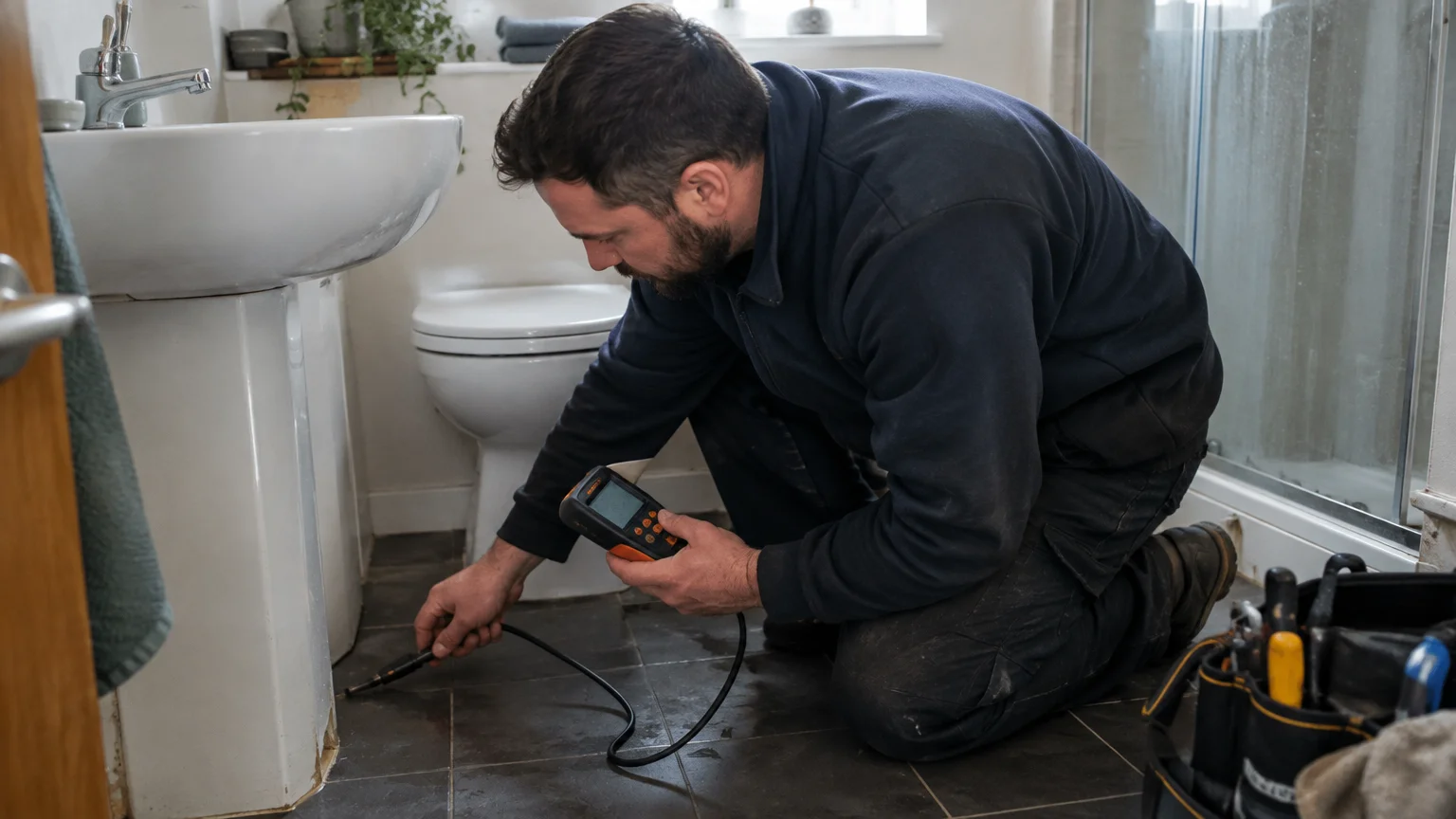
Plumbers can often narrow down a leak without opening a wall. They may use listening tools, moisture meters, and thermal cameras. Each tool finds different clues, so plumbers compare the results with the pipe layout and other test findings.
How do acoustic listening devices locate escaping water?
Acoustic listening devices help plumbers hear sounds made by water escaping from a pipe under pressure. A plumber may listen at exposed pipes, valves, floors, or other spots near the suspected leak. If a sound grows louder in one area, that can help narrow the search.
Noise from heating systems, traffic, appliances, or other pipes can affect what the tool hears. Listening alone may not show the exact leak location. The plumber may compare sounds at several points and use other checks to confirm the likely area. This tool can help when pipes are behind walls, under floors, or below soil.
When are thermal cameras or moisture meters useful?
A thermal camera shows patterns in surface temperature. Wet materials may look warmer or cooler than dry areas, depending on the conditions. The camera cannot see through walls or prove that a pipe is leaking. It helps find areas that may need more checks.
A moisture meter checks how much moisture is in a material. A plumber may compare readings across a wall or floor to find a damp area. This can show how far moisture has spread, but it may not show where the leak began. These tools guide the inspection; they do not replace professional judgment. A plumber may use them with meter checks or listening tests before suggesting that a surface be opened.
How do plumbers detect leaks in different pipe systems?
Leak detection depends on whether water is moving through a supply pipe or a drain pipe. Supply pipes carry water to fixtures, often under pressure. Drains carry used water away. Since they work in different ways, they create different signs and need different tests.
How is leak detection different for supply lines and drain pipes?
A supply-line leak may release water even when no fixture is being used. A plumber may check the meter, separate pipe sections, and listen for water escaping under pressure. Signs may include a damp wall, wet floor, or a change in pressure at fixtures.
A drain leak may show up only when a sink, tub, toilet, or appliance empties. A plumber may run water while watching an exposed drain or checking nearby areas for dampness. If the issue may be a blockage, a drain camera can help show what is inside an accessible drain pipe. This camera check is not the same as testing a pressurized supply pipe.
What changes when pipes are under a slab or behind a wall?
A slab is a concrete floor or foundation. Pipes under a slab or behind a finished wall are harder to reach. The plumber may gather several clues before choosing where to look more closely. Meter readings, sounds, moisture, pipe plans, and the building layout can all help narrow the search.
A warm or damp floor does not prove that a pipe below it is leaking. Heating systems, condensation, and other sources can create similar signs. The plumber may test nearby fixtures and compare more than one area. Careful testing can help avoid needless damage to walls, floors, or concrete, though opening a surface may still be needed to reach the pipe safely.
What happens during a professional leak detection inspection?
A professional leak detection inspection often starts with questions and a visual check. The plumber then chooses tests that fit the signs. They look for evidence, check how the pipes behave, and narrow down the likely source. The process can differ between a small home and a larger property.
What information and access should a homeowner provide?
Tell the plumber when the problem began, what changed, and which areas seem affected. Mention recent plumbing work, pressure changes, wet spots, odd sounds, or a water heater leak. Photos can show how a stain or damp area has changed over time.
Clear access to the water meter, shutoff valves, sinks, toilets, water heater, and visible pipes can help the inspection go smoothly. Keep pets and children away from wet or tested areas. If a tenant finds a leak, they should tell the property owner or manager and follow the building’s emergency plan. Do not remove walls or floors to search for a pipe.
How do plumbers narrow down the leak location?
The plumber checks visible fixtures and pipes first, then uses tests to compare different parts of the system. A meter check may show that water is moving. An isolation test may help identify which branch pipe is involved. Listening and moisture tools can then help focus the search on a smaller area.
Each result is a clue, but it may not give a final answer by itself. The plumber may repeat a test after turning off a fixture or separating a pipe section. Once the likely area is clear, the plumber can explain what access may be needed to confirm and repair the issue. Ask which signs support the finding and what the next step involves.
How accurate are water leak detection methods?
Leak detection methods can be useful, but no single tool guarantees an exact result in every building. Accuracy depends on the pipe, the leak, nearby noise, building materials, and how much of the system can be tested. Using more than one method can give the plumber stronger evidence.
What factors affect the accuracy of leak detection?
A small leak may make less sound or leave fewer moisture signs than a large one. Pipes under concrete, behind thick walls, or near noisy systems can be harder to check. Water can also move along framing or flooring, so the wettest surface may not be right above the leak.
Access to valves, meters, and exposed pipes also matters. Past repairs or changes may make the pipe layout less clear. A thermal camera may show a temperature pattern, while a moisture meter may find damp material. Neither tool proves that a pipe is the source. A careful inspection considers these limits rather than treating one reading as certain.
Why might more than one test be needed?
Different tests answer different questions. A meter check can suggest that water is flowing, while an isolation test can point to a pipe section. Listening tools may narrow the area, and moisture checks can show where water has reached a surface.
When several results agree, the plumber may have stronger evidence about the leak’s location. If results do not match, another test may help rule out a fixture, condensation, or another source of moisture. This step-by-step process can reduce guesswork and help avoid opening the wrong area. Ask the plumber to explain what each test showed before repair work starts.
Can a homeowner find a hidden water leak?
A homeowner can look for common signs and do simple, safe checks, but should not cut into walls or test gas lines. A meter check, a look under sinks, and a toilet dye check can offer useful clues. A licensed plumber should check uncertain leaks or serious damage.
Which simple checks are safe to do before calling a plumber?
Try these basic checks only when the area is safe and dry:
- Turn off taps and pause water-using appliances, then watch whether the meter still moves.
- Look under sinks and around toilets for dampness, loose fittings, or water marks.
- Put food coloring in a toilet tank and wait without flushing; color in the bowl may point to a tank leak.
- Check visible pipes and the water heater for drips, rust, or wet flooring.
- Note changes in pressure, sounds, smells, and when a wet area appears.
These checks do not find every leak or prove that a pipe is damaged. A meter may show use from a device that was not noticed. Keep notes and share them with the plumber. Do not touch water near electrical equipment, enter tight spaces, or move heavy appliances to reach pipes.
When should testing stop and professional help begin?
Stop if water is near outlets, a ceiling is sagging, a floor feels soft, or the leak is growing. Do not break walls, floors, or concrete to search for a pipe. Do not adjust a gas line or try to fix a water heater with a possible gas or electrical fault.
If a water heater leaks from the bottom, the source may be a valve, pipe connection, or the tank itself. A plumber can check it and decide whether repair is safe. Water heater repair may be needed, or water heater replacement may be the right next step if the tank is damaged. If you smell gas near the heater, leave without using switches or flames. Contact emergency services or the gas utility from a safe place.
When is a hidden water leak an emergency?
A hidden leak is an emergency when it causes fast flooding, creates an electrical danger, weakens a ceiling or floor, or stops an important water supply. A burst pipe, sewage backup, or active water heater leak may also need urgent help. Acting quickly can limit further damage.
Which leak signs require immediate action?
A pipe spraying water, water spreading across floors, or a bulging ceiling needs urgent attention. A sewer smell or wastewater coming back through a drain can pose a health risk. Water near electrical panels, outlets, or appliances can create a shock or fire risk.
A sudden drop in water pressure can have several causes. It needs prompt attention when it comes with wet walls, a moving meter, or visible water damage. If a pipe bursts, turn off the main water valve if you can reach it safely. Do not enter a flooded area where electrical equipment may be live. Call emergency services if anyone is in immediate danger.
What should occupants do to limit water damage?
Move people and pets away from wet areas, especially near power sources. If the main shutoff is safe to reach, close it. Do not touch electrical devices or switches in a wet room. If water seems to come from one fixture, close its shutoff valve only if you can reach it safely.
Move belongings out of the water when safe, and take photos from a dry area. Do not use a household vacuum near electrical hazards. If you smell gas, leave the building and avoid anything that could create a spark. The Pipeline and Hazardous Materials Safety Administration advises quick action when someone suspects a gas leak. Seek emergency help from a safe place.
What happens after a plumber locates the leak?
After finding the likely leak area, the plumber explains the evidence and repair choices. The repair may involve a fitting, a short pipe section, a fixture, or a larger part of the plumbing system. The right choice depends on the pipe’s condition, access, and what caused the leak.
How do plumbers determine the appropriate repair?
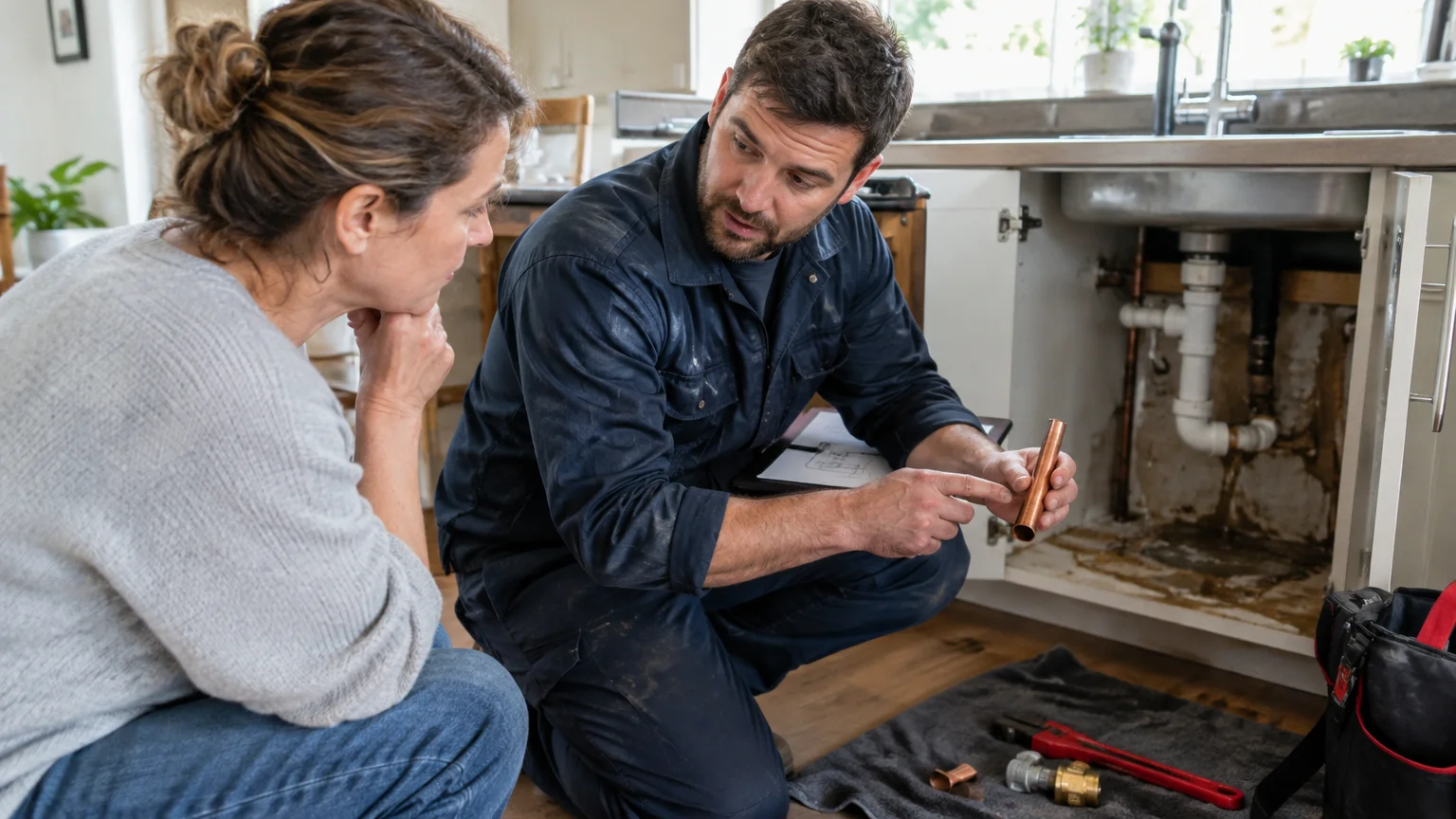
A plumber checks the pipe material, the leak’s size and location, and whether nearby parts show wear. A loose connection needs a different repair from a split pipe or a failed water heater tank. If the same area has had repeated damage, the plumber may look for a wider issue, such as corrosion or movement that puts strain on the pipe.
The plumber should explain what needs to be shut off, how the repair will be tested, and whether a wall or floor needs to be opened. Emergency Plumbing may help with urgent leaks and burst pipes. Water Heater Repair may be needed when a leak or failure involves a hot water unit. A clear explanation helps the property owner understand the planned work.
What restoration work may be needed after the plumbing repair?
Fixing the pipe stops the leak, but it may not dry the building. Wet drywall, insulation, flooring, or cabinets may need drying or repair. The work depends on how long water spread, which materials got wet, and whether they can dry fully.
A plumber can explain which building materials were opened or affected, but other skilled workers may handle restoration. Keep records of the damage and repair, and follow advice from the property owner or insurer when needed. Do not cover damp areas with paint or new flooring before they are dry. Covering them too soon can hide moisture and let damage continue.
How can homeowners reduce the risk of future hidden leaks?
Regular checks can help homeowners spot changes before they cause major damage. Look at visible pipes, fixtures, and appliance connections from time to time. Fix small drips promptly, and learn where the main water shutoff is before an emergency happens.
Which routine checks can reveal developing problems?
Check under sinks, around toilets, behind easy-to-reach appliances, and near the water heater for dampness or rust. Notice whether a toilet keeps filling or a faucet drips after it is closed. Keep the area around shutoff valves clear so they can be reached if a pipe leaks.
Use appliances as their makers advise, and replace damaged supply hoses when needed. Do not ignore a pressure change, musty smell, or a meter that moves while water use is paused. These signs may have more than one cause, but checking them early can help find a problem before more materials get wet.
When can plumbing inspections help catch leaks early?
An inspection may help when a property has repeated leaks, older visible pipes, recent plumbing changes, or unexplained water use. It can also help a new owner learn where shutoff valves and key plumbing parts are. The plumber can review the system, point out visible concerns, and explain what to watch.
An inspection cannot promise that a hidden leak will never happen. It can give a clearer view of the plumbing and point out issues that need attention. Homeowners in Temple can keep inspection notes with repair records and photos. That history can help a plumber if a new stain, pressure change, or damp area appears later.
Key takeaways
- A moving water meter, damp surfaces, or unexplained pressure changes may signal a hidden leak.
- Plumbers use several tests because each one finds different clues.
- Homeowners can do safe checks but should not open walls or handle hazardous systems.
- Shut off water only when the valve is safe to reach, and stay clear of electrical hazards.
- Repairing a pipe may not dry or restore materials already harmed by water.
Frequently Asked Questions
What causes low water pressure in a house?
Low pressure can come from a partly closed valve, a blocked fixture, a supply issue, or a leak. If pressure drops across the whole home, note whether hot water, cold water, or both are affected. A plumber can test the system and help find the cause.
What should someone do if a water heater is leaking from the bottom?
Stay away from wet electrical parts and do not try to open or fix the unit. If water is still leaking, close the supply valve only if it is safe to reach. A plumber can check whether the cause is a connection, a drain valve, or a damaged tank.
How can someone detect a gas leak near a water heater?
A sulfur-like or rotten-egg smell may mean gas has a warning odor added. Do not try to confirm a leak yourself. Leave the building, avoid flames and switches, and contact emergency services or the gas utility from a safe place. Do not return until officials say it is safe.
What is a plumbing emergency?
A plumbing emergency puts people, a building, or an important water supply at immediate risk. Examples include a burst pipe, fast flooding, sewage backing up, or water near live electrical equipment. Shut off water if safe, move away from danger, and seek urgent professional help.
What should someone do when a pipe bursts?
Move people away from the water, then close the main shutoff valve if it is safe to reach. Stay clear of wet electrical areas and do not enter unsafe rooms. Take photos from a dry place and contact an emergency plumber. If anyone faces immediate danger, call emergency services.
Conclusion
Hidden leaks can be hard to spot, but changes in water use, pressure, smell, or surface moisture may offer early clues. Plumbers combine tests to confirm a leak and narrow down its location before choosing a repair. Safe checks can help homeowners share useful details, while urgent or uncertain problems need professional attention.
For leak detection or urgent plumbing help in Temple, contact Temple Texas Plumbing.
If you are not sure what you are dealing with, it is worth having someone look at it before it turns into a bigger job. Get in touch with Temple Texas Plumbing in Temple, Texas today and we will tell you where you stand.