Knowing how plumbers find gas leaks can help people act safely during a serious home emergency. Licensed plumbers check the system in sections, use gas detectors and pressure tests, confirm the source, and repair the damaged part. They also test the system before anyone uses the gas again.
A gas leak can cause fire, an explosion, or illness. Anyone who smells rotten eggs, hears hissing, or feels dizzy should leave the area at once. The steps below explain what trained plumbers do and what people should do first in Temple, Texas.
Table of Contents
- How do plumbers find gas leaks in a home?
- What tools do plumbers use to detect gas leaks?
- What steps does a plumber take during gas leak detection?
- Where do gas leaks commonly occur in a house?
- What should you do if you suspect a gas leak?
- How do plumbers repair and verify a gas leak?
- When should you call an emergency plumber for a gas leak?
How do plumbers find gas leaks in a home?
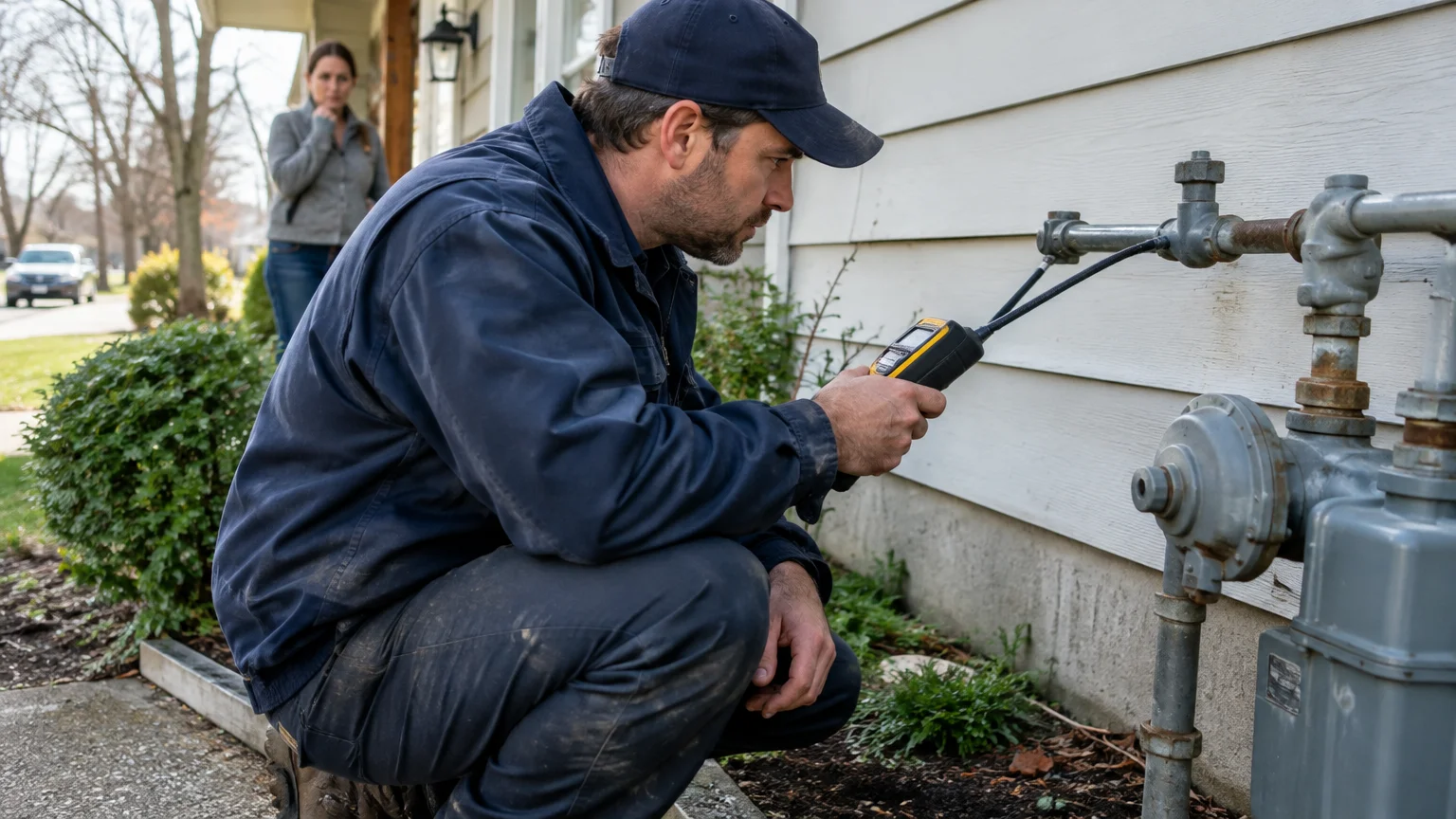
Plumbers find gas leaks by checking the gas system in small sections. They first listen, look, and ask questions about what people noticed. Then they use tools that measure gas in the air or show whether the pipes hold pressure.
A trained plumber does not rely on smell alone. Odor can move through rooms, fade over time, or come from a different place than the leak. Careful testing helps the plumber find the source instead of guessing or replacing the wrong part.
Why gas leak detection needs professional equipment
Natural gas and propane can burn when they mix with air. A combustible gas detector checks the air near pipes, fittings, valves, and appliances. A pressure test checks whether a closed gas system keeps its pressure. Together, these tests help narrow down the leak.
Gas work also needs care around flames, switches, motors, and other things that can make a spark. People should never use a lighter or match to search for a leak. They should also avoid electrical devices near the suspected area and leave the property when gas is present.
The U.S. Department of Energy advises people to leave at once when they smell gas or suspect a leak. Emergency services or the gas utility should be contacted from a safe place. A plumber can then help with testing and repair after the area is safe.
How plumbers check the property before testing
The plumber first asks what people saw, heard, or smelled. Helpful details include a rotten-egg odor, a hissing sound, a pilot light problem, or sudden dizziness. The plumber also asks which appliances use gas and whether recent work changed the pipes.
Temple Texas Plumbing helps property owners in Temple understand when a gas concern needs urgent care. The check may include the furnace, range, water heater, fireplace, outdoor equipment, shutoff valves, and visible supply lines. The plumber then chooses a safe way to test the property.
What tools do plumbers use to detect gas leaks?
Plumbers use more than one tool because each test gives different information. Electronic detectors can find gas in the air. Pressure tests can show that gas is escaping from a closed section. An approved leak detection solution can help confirm a leak at an exposed connection.
Electronic combustible gas detectors
An electronic combustible gas detector senses flammable gas near a possible leak. The plumber moves it slowly around appliance connections, valves, unions, and pipe joints. A union is a joined pipe fitting that can be taken apart for service.
The detector can guide the search when a leak is small or hidden. It does not replace a full inspection. Air can carry gas away from its source, so the strongest reading may not be beside the damaged part.
Readings can also change when a burner, vent, or appliance runs. The plumber compares readings and checks the whole system in order. This approach helps prevent a quick reading from being mistaken for the final answer.
Pressure testing and gas-rated leak detection solution
A pressure test seals part of the gas system. The plumber then checks whether the section holds pressure during the test. If the pressure falls, gas may be escaping somewhere in that section, but the test may not show the exact spot.
The plumber may divide the system into smaller parts and test again. This helps show whether the problem is near one appliance or inside a branch of the piping. It can also help find a hidden leak that is not visible from the room.
For exposed fittings, a gas-rated leak detection solution may form bubbles where gas escapes. This method can be useful when a trained person applies it correctly. Household soap should not replace an approved product or a professional check, especially around old fittings and sensitive equipment.
What steps does a plumber take during gas leak detection?
A plumber starts by making the area safer. The exact steps depend on the smell, gas reading, building layout, and fuel type. Work should stop if the conditions create immediate danger for people or the plumber.
Isolating appliances, fittings, and gas lines
When it is safe, the plumber may shut off the building supply or an appliance valve. This limits the gas entering the area. The plumber also keeps flames and other ignition sources away and may improve airflow only when doing so is safe.
A homeowner should not turn a valve back on after a gas utility worker or emergency responder has shut it off. The person who closed the valve may need to check the property before service returns. Following those instructions helps protect everyone inside.
The plumber then separates the system into sections. This can show if the issue is near one appliance or within a branch of the piping. It also helps the plumber avoid opening more of the system than needed.
Confirming the leak source and nearby connections
The plumber checks the suspected fitting, connector, valve, and nearby pipe. A loose connection may be easy to see. Corrosion, heat damage, or a hidden problem may need closer testing.
The plumber also checks for pipe movement, poor support, and signs of an improper installation. Gas can travel through cabinets, wall spaces, and floor openings. For that reason, the first place a detector responds may not be the true source.
A skilled plumber traces the system before replacing a part. This matters in older homes, rental properties, and buildings where past work may have changed the gas lines. Temple property owners should not try to tighten or remove a gas fitting themselves.
Where do gas leaks commonly occur in a house?
Gas leaks often happen at connections, valves, flexible connectors, and damaged pipe sections. The risk can rise when parts are old, moved, corroded, or installed poorly. A leak can also start when an appliance shifts and pulls on its connection.
Appliance connections, valves, and flexible connectors
Common trouble spots include a range connector, water heater connection, furnace shutoff valve, and fireplace fitting. Flexible connectors can be damaged when bent, pinched, stretched, or exposed to heat. Moving an appliance during cleaning or remodeling can also place stress on the connector.
A homeowner may look for visible damage without touching the fitting. The homeowner should not tighten a gas connection, remove a connector, or test it with a flame. Any smell or hissing near an appliance calls for caution and professional help.
Temple Texas Plumbing can also help owners understand related plumbing concerns. These may include water heater issues, leaks, blocked drains, and other urgent problems. Gas concerns should always take priority over routine work such as drain cleaning or drain repair.
Pipes, joints, and concealed gas lines
Gas piping may leak at threaded joints, unions, valves, or areas damaged by rust or impact. Concealed lines are harder to check because the source may sit inside a wall, crawl space, or floor. A recurring odor or a detector reading in one area can point to a problem.
Dead plants near an outside gas line may also raise concern. These signs do not prove that a leak exists. They do show why the system needs a proper check instead of a home test.
Temple Texas Plumbing serves property owners across the main Temple area, including Downtown, Midtown, Canyon Creek, Western Hills, Bird Creek, and nearby neighborhoods. Local owners can ask for help with gas concerns, leaks, clogs, and other plumbing needs.
What should you do if you suspect a gas leak?
Leave the area quickly and avoid anything that could make a spark. Do not use light switches, phones, appliances, matches, or vehicles near the suspected leak. Once safely away, call 911 or the gas utility emergency line when needed, then arrange plumbing help.
Immediate safety steps for occupants
The safest first actions are simple:
- Move people and pets outside without searching for the leak.
- Avoid flames, switches, plugs, vehicles, and powered equipment.
- Do not smoke, use a flashlight, or use a phone inside.
- Call emergency services or the gas utility from a safe location.
- Do not return until the proper authority says the property is safe.
Do not open windows or doors if doing so means moving toward the smell or touching a switch. Do not shut off the main gas valve unless it is outside, easy to reach, and the gas utility gives clear instructions. Safety matters more than saving appliances or belongings.
When to leave the property and call emergency services
People should leave at once when the smell is strong, a hissing sound is present, anyone feels ill, or a detector alarms. A visible fire, damaged gas line, or suspected leak near an ignition source requires emergency services. The gas utility may need to make the area safe before a plumber starts repair work.
A mild or uncertain odor still needs attention. Odor can move through a building and may not remain strongest at the source. People should not ignore the smell just because it fades.
How do plumbers repair and verify a gas leak?
A plumber repairs the failed part after confirming the source and making the system safe. The repair may involve a fitting, valve, connector, appliance part, or section of approved gas pipe. The right choice depends on the damage, access, pipe type, and local rules.
Repairing or replacing faulty gas parts
A plumber may replace a damaged connector, valve, joint, or pipe section. Some parts can be repaired, while others should be replaced. The plumber also checks pipe supports, clearances, shutoff access, and nearby appliance connections.
Homeowners should not patch gas piping with tape, sealant, or makeshift parts. Products made for water pipes are not always safe for fuel gas. A licensed professional can choose approved materials and complete work that follows local requirements.
Simple checks and upkeep are safe for homeowners when no gas is suspected. People can read appliance instructions, keep vents clear, and watch for visible damage from a safe distance. They should leave and call for trained help when they smell gas, hear hissing, or see a damaged line.
Testing the system after the repair
After the repair, the plumber tests the affected section and may test the full system. The test can include pressure checks, detector readings, and a close look at repaired connections. The plumber also checks that appliances work safely and that no new leak appears.
A repair is not complete just because the smell fades. Gas may remain in a confined area, and an appliance may have another problem. The plumber should explain what was found, what was repaired, and whether a utility worker or another qualified person must restore service.
When should you call an emergency plumber for a gas leak?
An emergency plumber should be called after people reach safety and emergency services or the gas utility have been contacted as needed. Urgent signs include a strong odor, hissing, a damaged line, repeated detector alarms, or a leak near a gas appliance.
Warning signs that need immediate professional help
A homeowner should treat these signs seriously:
- A rotten-egg odor that returns or becomes stronger.
- Hissing near a pipe, appliance, valve, or wall.
- A gas detector alarm or unexplained pressure loss.
- Flames that look unusual or keep going out.
- Dizziness, nausea, headache, or breathing trouble indoors.
- Physical damage to a gas line or appliance connector.
A gas leak is not like a routine plumbing repair. A homeowner may safely clean a drain or replace some faucet parts, but gas leak testing and repair need trained help. DIY testing with a flame is never safe.
What homeowners should ask before work begins
After the property is safe, the homeowner can ask what part failed, what test confirmed the leak, and what repair is needed. The homeowner can also ask whether the work needs an inspection, permit, utility release, or another licensed trade.
The final cost is confirmed on a quote. It may depend on the parts, system size, access, damage, and urgency. A simple exposed connection may be less involved than a hidden pipe repair or a larger gas line problem.
Temple Texas Plumbing provides emergency plumbing guidance for homes, businesses, and nearby communities. Contact us today to arrange professional help with a suspected gas leak or another urgent plumbing problem.
Key takeaways
- Gas leak detection should use professional tools, never a flame.
- Leave immediately when there is a strong odor, hissing, or illness.
- Call emergency services or the gas utility from a safe location.
- Plumbers use detectors, pressure tests, and connection checks.
- A repaired gas system must be tested before normal use.
Frequently Asked Questions
Can a homeowner find a gas leak without a detector?
A homeowner may notice an odor, hissing, or appliance trouble, but these signs do not locate a leak safely. The homeowner should leave and call for help instead of searching indoors. A trained plumber uses approved tools and controlled tests after the area is safe.
What does a gas leak smell like?
Natural gas is usually given a strong smell often compared with rotten eggs. The smell may be faint, strong, or uneven because air can move gas through rooms and wall spaces. Any unexplained gas odor should be treated as a warning, even if it soon disappears.
Can a gas leak come from a water heater?
Yes. A water heater can have a problem at its shutoff valve, connector, control area, or nearby gas piping. A pilot issue or damaged connection can also cause concern. Occupants should leave if gas is suspected and should not relight the appliance until a qualified professional checks it.
How long does gas leak detection take?
The time depends on the building size, number of appliances, pipe access, and whether the leak is visible. An exposed connection may be confirmed quickly. A leak inside a wall, crawl space, or long pipe branch may need more careful testing.
Is a gas leak always an emergency?
A suspected active gas leak should be treated as urgent because gas can ignite and harm people. A strong smell, hissing, physical damage, or illness requires immediate evacuation and an emergency call. Even an uncertain odor needs prompt professional advice instead of home testing or delay.
If you are not sure what you are dealing with, it is worth having someone look at it before it turns into a bigger job. Get in touch with Temple Texas Plumbing in Temple, Texas today and we will tell you where you stand.