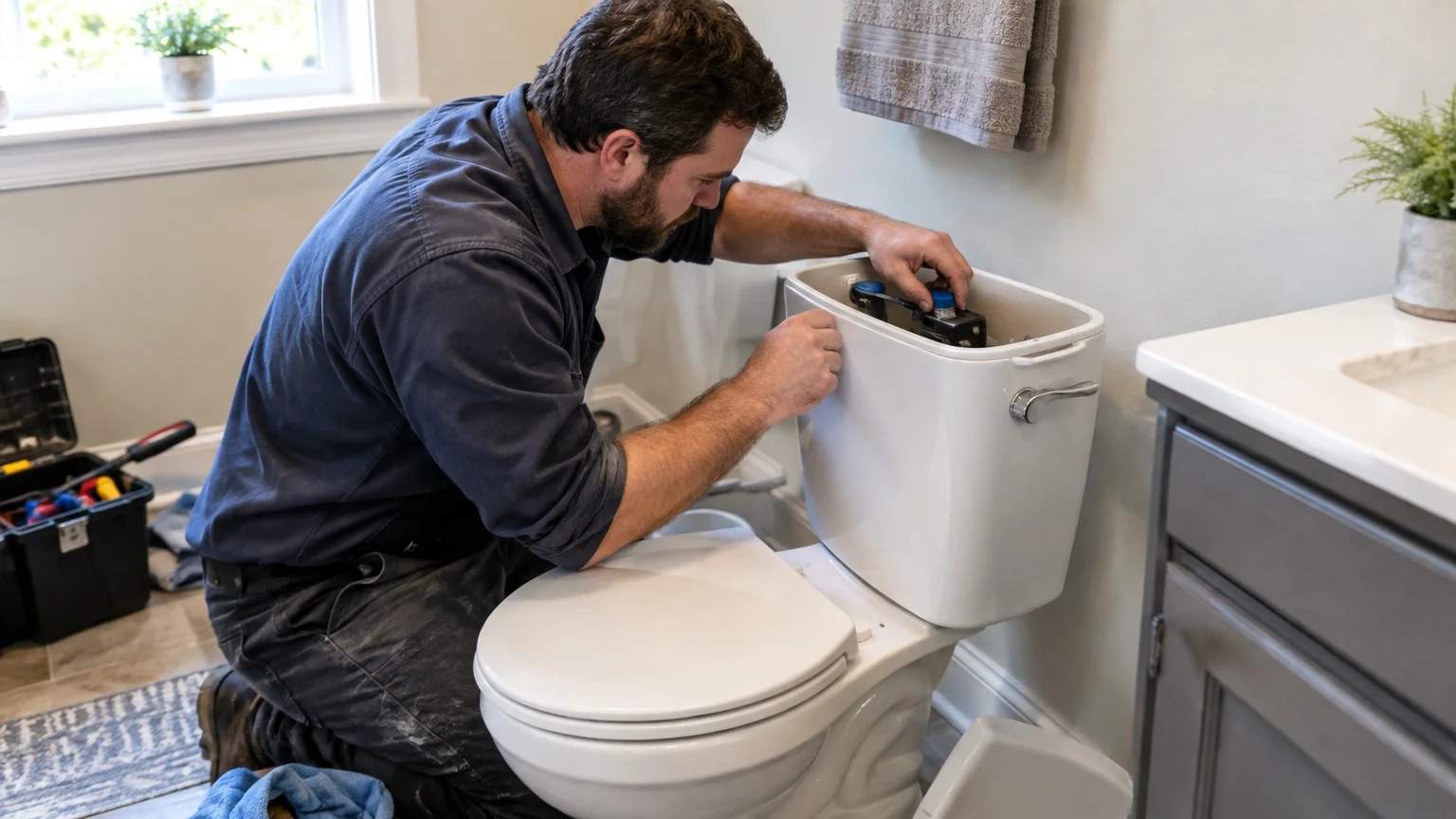
A toilet not flushing fix often begins with checking the handle, chain, tank water level, and flapper. A partial clog may need careful plunging. Repeated clogs, leaks, or a weak flush can point to damaged parts or a deeper drain problem. Safe checks can help, but some faults need skilled repair.
Why is my toilet not flushing properly?
A toilet may not flush because the tank is low, the handle is loose, or the chain has come off. A worn flapper can also stop the flush. A clogged trap may keep water from moving through the bowl. The right toilet not flushing fix depends on where the fault begins.
The tank holds water for each flush. Pressing the handle lifts the flapper, which is the rubber seal over the flush valve. Water then moves into the bowl and pushes waste through the trap and drain. If one part fails, the toilet may flush weakly, keep running, or not flush at all.
How do the toilet tank, flapper, and flush valve work together?
The handle connects to a small chain or rod inside the tank. That part lifts the flapper. The flush valve is the opening under the flapper. It lets tank water flow into the bowl. After the tank empties, the flapper should close and the fill valve should add water again.
A loose chain may not lift the flapper high enough. A stretched flapper may let water leak into the bowl. A worn fill valve may not add enough water for a strong flush. These faults often cause toilet repair problems in homes, rentals, and small businesses.
What causes a weak or failed flush?
Low tank water can reduce flush power. Water should normally sit near the marked fill line inside the tank. A broken handle, bent lever, or loose chain can also stop the flush valve from opening. Mineral buildup may block the small holes under the bowl rim and lower water flow.
A clogged trap is another common cause. The trap is the curved passage inside the toilet that holds water and blocks sewer gases. Paper or another item can block this passage. The bowl may then drain slowly or rise during a flush. A toilet bowl fill valve repair may help when the tank will not refill, but it will not clear a clog.
What can I check before calling a plumber?
A homeowner can safely check the handle, chain, flapper, tank level, and visible leaks. These checks do not require removing the toilet. They also do not involve electrical equipment. Find the water supply valve before testing the toilet. Turn it off if the bowl starts to rise.
Lift the tank lid and press the handle first. Watch the chain and flapper as the handle moves. The chain should lift the flapper, but it should not hold it open. If the chain has come loose, it may fit back onto the handle arm. If the handle moves without lifting anything, the handle or tank lever may need repair.
How can someone check the fill valve and flapper?
Check whether the tank fills to its marked line after a flush. If the tank stays low, the fill valve may be dirty, worn, or set wrong. Repairing a toilet fill valve may bring back the right water level. Close the supply valve before removing any part.
Look for water moving from the tank into the bowl when no one is using it. This often means the flapper does not seal. A homeowner may clean the seal area and look for damage. A cracked, warped, or hard flapper usually needs replacement. This is a simple diy toilet repair when the shutoff valve works and the part is easy to reach.
How should a plunger be used?
A flange plunger works best for a toilet. Its lower lip fits over the drain opening. Add enough water to cover the rubber cup. Set the cup over the opening, then push down gently first. This creates a seal. Follow with several firm, steady strokes.
Stop if the water rises near the rim. Do not keep flushing. Do not pour harsh drain chemicals into the toilet. They can splash back and harm the toilet parts. If plunging does not help, a toilet auger may be safer than more force. A professional should check a blockage that returns soon after clearing.
When does a toilet flushing problem need professional repair?
Professional toilet repair is needed when the toilet overflows, leaks at its base, clogs often, or flushes poorly after safe checks. A plumber can check the toilet, drain path, and nearby pipes. This may stop a small fault from causing water damage.
A leak around the base may mean the seal between the toilet and drain has failed. Water can damage the floor or cabinet below. A crack in the bowl or tank also needs quick attention. Do not patch cracked porcelain as a lasting repair.
What signs point to a deeper blockage or sewer-line issue?
A deeper drain problem may affect more than one fixture. Slow sinks, bubbling drains, bad smells, or water rising in a shower during a toilet flush can signal a shared drain issue. These signs differ from a simple flapper or handle problem.
Repeated clogs may point to a pipe problem, an object in the drain, or a sewer-line fault. Emergency Plumbing may be needed when wastewater backs up, the toilet overflows, or several fixtures stop draining. A plumber can trace the problem without repeated flushing that may spread water through the home.
A toilet problem does not usually explain a suspected gas leak. If you smell gas, leave the area and avoid switches and flames. Contact the gas utility or emergency services. Never test a suspected leak with a flame.
When should a toilet be repaired or replaced?
Repair is often right when the problem is a handle, chain, flapper, fill valve, or flush valve. Replacement may make more sense when the porcelain is cracked, parts fail often, or the toilet no longer clears the bowl well. The right choice depends on the toilet’s condition, fit, and water use.
Temple Texas Plumbing helps homeowners, landlords, and businesses in Temple decide whether repair or replacement is best. A local fixture plumber can also check supply lines, shutoff valves, and floor damage before the work is done. Ask for a quote that reflects the parts, access, damage, and urgency. The final cost is confirmed on the quote.
How can you prevent future toilet flushing problems?
Regular care helps prevent weak flushes, leaks, and avoidable clogs. Do not flush wipes, paper towels, hygiene products, grease, or other items that do not break down like toilet paper. Children should not use the toilet to dispose of toys or small objects.
Check the toilet for leaks during routine cleaning. Listen for water that keeps running after the tank fills. Look inside the tank when the flush becomes weak. Early attention may prevent wasted water and damage around the fixture.
What maintenance helps protect a toilet?
Useful habits include:
- Test the handle and chain when the flush feels weak.
- Keep the tank water near its marked fill line.
- Replace a damaged flapper before the toilet runs constantly.
- Use a flange plunger for small, fresh clogs.
- Keep the shutoff valve easy to reach and free from rust.
- Arrange repair when leaks, smells, or repeat clogs appear.
Low water pressure can affect some plumbing fixtures, but it is not the only cause of a poor flush. A weak toilet may have blocked rim holes, worn tank parts, or a drain restriction. If several fixtures have low pressure, the property may need a wider plumbing check.
Should a toilet be repaired or replaced for better water use?
A repair may restore normal use without changing the toilet. Replacement may help when an older toilet has repeated faults or poor flushing power. A plumber can check the space, supply connection, drain fit, and household needs before installation.
Temple Texas Plumbing provides fixture guidance for properties in the main Temple area. This includes Downtown, Midtown, Canyon Creek, Western Hills, Bird Creek, and nearby neighborhoods. Professional help is useful for commercial restrooms, rental properties, and toilets with hidden leaks. Good care helps protect floors, walls, and connected plumbing.
Key takeaways
- Check the handle, chain, flapper, and tank water level first.
- Use a flange plunger gently and stop if the bowl starts rising.
- Repeated clogs, leaks, and overflows can signal deeper damage.
- A cracked toilet should be replaced, not patched for long-term use.
- Contact a professional when safe checks do not restore normal flushing.
Frequently Asked Questions
How do you fix a toilet that keeps running?
Check whether the chain holds the flapper open or the water level is too high. A worn flapper, fill valve, or handle can keep water moving into the bowl. Closing the supply valve can stop the flow for a short time. Damaged parts may need running toilet repair.
Why does a toilet keep running after the tank fills?
A toilet often keeps running because the flapper does not seal, the fill valve does not shut off, or the tank level is too high. Cleaning the seal area may help for a short time. If water still enters the bowl, a plumber should check the inside parts.
Can a blocked toilet cause an overflow?
Yes. A blockage can stop water from leaving the bowl. Another flush may then push water over the rim. Stop flushing when the water rises and close the supply valve. Careful plunging may clear a small blockage. Persistent or repeated blockages need a professional check.
What causes low water pressure in a house?
Low pressure may come from a closed valve, a clogged screen, damaged pipes, a failing pressure regulator, or a wider supply issue. A weak toilet flush may have another cause, such as a blocked trap or worn tank part. A plumbing check can separate these problems.
Conclusion
The best toilet not flushing fix depends on the failed part or blocked passage. Simple checks can find a loose chain, low tank water, or worn flapper. A homeowner does not need a professional for safe checks and basic care. Leaks, cracks, overflows, and repeat clogs need skilled help. Contact us to arrange help from Temple Texas Plumbing.